
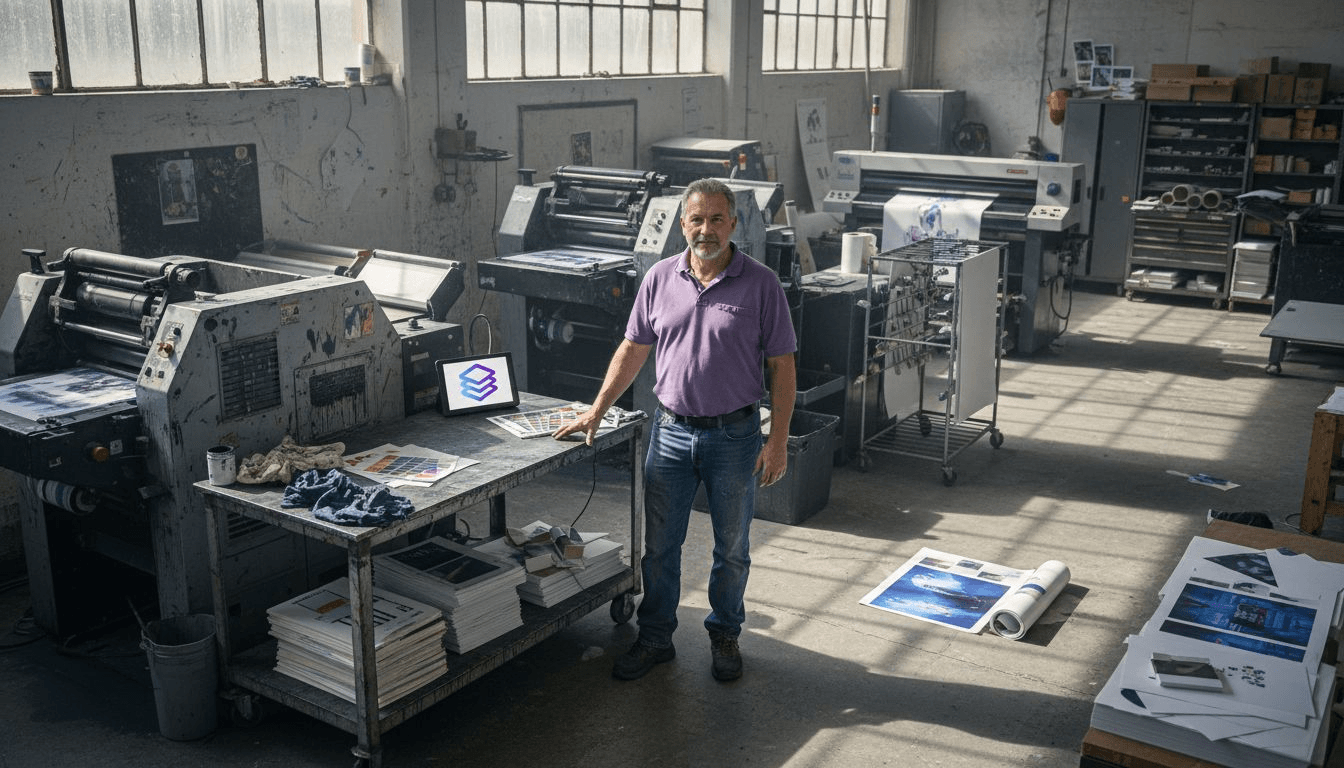
Selecting the wrong printing method can derail production timelines, inflate costs, and compromise print quality. Whether you're managing high-volume textile orders, producing branded packaging, or personalizing marketing materials, understanding how different printing techniques align with your project requirements is essential. This guide walks you through evaluation criteria and detailed method comparisons to help you make informed decisions that optimize quality, efficiency, and budget.
Table of Contents
- How to choose the right printing method: key selection criteria
- Screen printing: vibrancy and durability for high-volume runs
- Offset printing: quality and consistency for large print runs
- Digital printing: flexibility and speed for short runs and personalization
- Advanced methods: direct-to-film, flexography, and gravure printing
- Choosing the best printing method for your project: situational recommendations
- Explore LayerPrep for smarter print preparation
Key takeaways
| Point | Details |
|---|---|
| Selection criteria | Method choice depends on color fidelity, production volume, substrate compatibility, unit costs, and workflow complexity. |
| Screen printing strengths | Delivers vibrant, durable prints ideal for textiles and high-volume runs with spot color designs. |
| Digital printing advantages | Offers flexibility for short runs, personalization, and rapid turnaround without minimum order requirements. |
| Offset printing efficiency | Cost-effective for large runs exceeding 5,000 copies with consistent quality and sharp resolution. |
| Advanced method options | DTF supports complex textile colors, flexography handles fast packaging, gravure suits ultra-high volume production. |
How to choose the right printing method: key selection criteria
Before diving into specific printing methods, you need a framework for evaluation. Color reproduction fidelity directly impacts brand consistency and design integrity. If your project requires exact Pantone matches or photographic detail, prioritize methods known for accurate color rendering.
Print volume and production speed determine cost-effectiveness and turnaround times. High-volume runs benefit from methods with lower per-unit costs after initial setup, while short runs need techniques without expensive setup fees. Substrate compatibility is equally critical because not all methods work effectively on textiles, plastics, or flexible materials.
Cost per unit and setup expenses shape your budget decisions. Some methods like gravure require substantial upfront investment but deliver unbeatable per-unit economics at massive scale. Others like digital printing eliminate setup costs entirely but charge more per piece. Design complexity and preparation workflow affect file prep time, error rates, and production efficiency. Complex gradients or multi-color separations demand different preparation approaches than simple spot color designs. Tools that create efficient print files can significantly reduce manual labor and minimize costly design vs print fail production errors.
Pro Tip: Create a decision matrix scoring each method against your project's volume, substrate, color needs, and budget to quickly identify the best fit.
Screen printing: vibrancy and durability for high-volume runs
Screen printing pushes thick layers of ink through mesh stencils, creating exceptionally vibrant colors with outstanding durability. This method retains 95% of color vibrancy after 50 washes, outperforming digital printing by 25%. The substantial ink deposit produces rich, opaque colors that resist fading and washing, making it the gold standard for textiles.
Cost efficiency kicks in at production volumes exceeding 100 units, especially for designs with simple color palettes. Each color requires a separate screen, so spot color separations work best. Screen printing excels for apparel, signage, posters, and promotional products where durability and color impact matter most.
Manual color separation and screen preparation can consume significant time, but automation platforms transform this workflow. The screen print tools from LayerPrep automatically separate colors and generate print-ready layers, eliminating tedious manual work. Understanding print layers guide principles helps optimize file preparation for screen printing production.
This method shines for projects prioritizing wash durability and color vibrancy over photographic detail. If you're producing branded merchandise, team uniforms, or event apparel in quantities above 100 units, screen printing delivers unmatched value. The combination of low per-unit costs at scale and exceptional longevity makes it the preferred choice for custom printing applications requiring durability.
Pro Tip: Limit designs to four colors or fewer to maximize screen printing cost efficiency and reduce setup complexity.
Offset printing: quality and consistency for large print runs
Offset printing transfers ink from metal plates to rubber rollers before applying it to paper, delivering sharp resolution between 300 and 400 DPI. This indirect transfer method produces consistently high-quality prints with excellent color fidelity, making it ideal for branded marketing materials, magazines, brochures, and packaging.
The cost efficiency of offset printing increases notably above 5,000 copies due to setup amortization and consistent high quality. Initial expenses include plate production and press setup, which can extend lead times and make small runs uneconomical. However, once setup is complete, per-unit costs drop dramatically as volume scales.
Offset printing handles detailed designs beautifully, reproducing fine lines, gradients, and photographic images with precision. It works best for fixed designs without personalization requirements. If you're producing catalogs, corporate reports, or product packaging where color consistency across thousands of copies matters, offset delivers reliable results.
The method requires properly prepared print-ready files with correct color profiles and bleed specifications. Learning to streamline digital artwork process practices reduces prepress errors and ensures smooth production. While setup costs create barriers for small quantities, the combination of superior quality and low per-unit pricing at scale makes offset the economical choice for offset printing overview projects exceeding 5,000 copies.
Digital printing: flexibility and speed for short runs and personalization
Digital printing sends files directly from computer to press without plates or screens, enabling production without minimum order quantities. This direct approach supports variable data printing, allowing each piece to feature unique text, images, or personalization. Print speeds reach 2,500 pages per hour, enabling turnaround times under 24 hours for most projects.
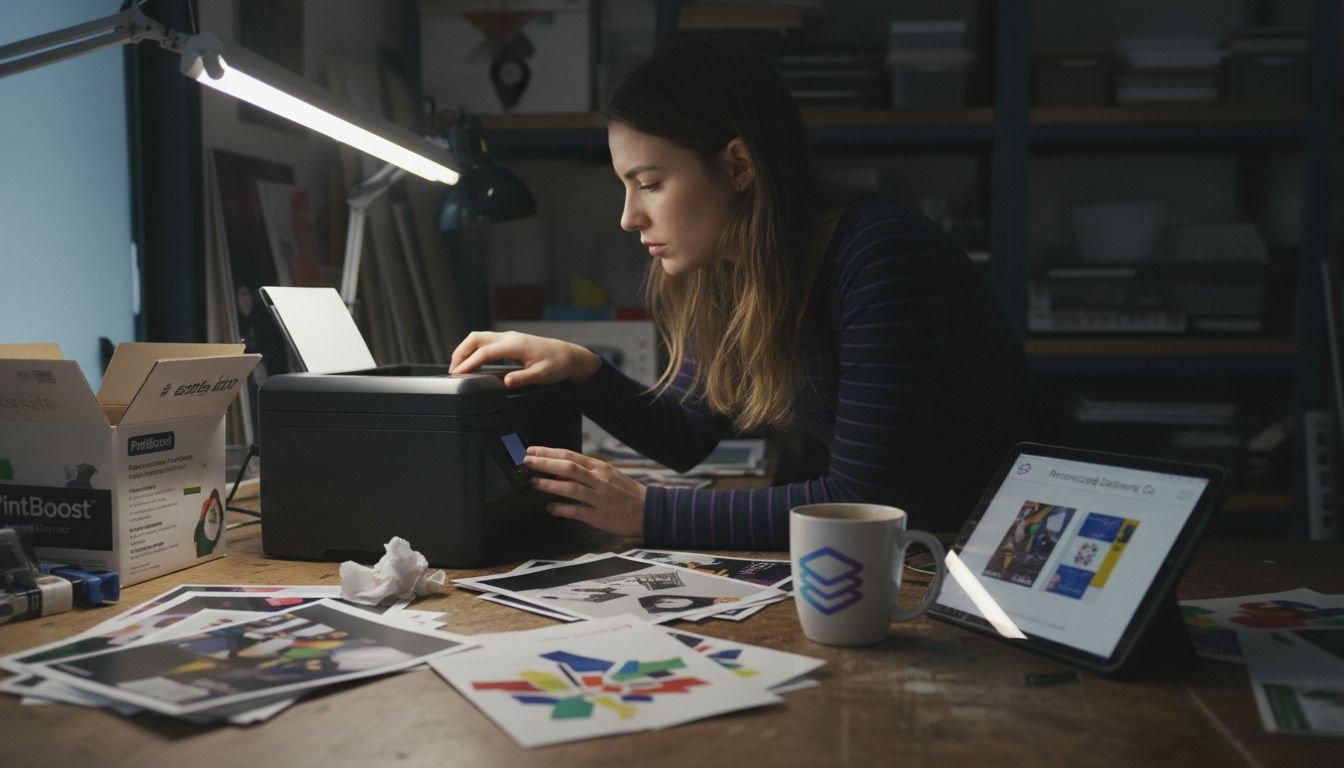
The elimination of setup requirements makes digital printing cost-effective for quantities under 500 copies. You can print one piece or one thousand with identical per-unit pricing, making it perfect for prototypes, test marketing, and customized materials. Business cards, personalized invitations, short-run brochures, and proof copies all benefit from digital's flexibility.
However, per-unit costs remain higher than offset at larger volumes, and print durability falls short of screen printing for textile applications. Color vibrancy and longevity are acceptable but not exceptional. File preparation is simplified since digital presses accept standard formats without color separation, though understanding digital artwork print process best practices still improves results.
Digital printing shines when you need rapid turnaround, personalization capabilities, or small quantities without setup fees. If your project involves testing multiple designs, creating customized versions for different audiences, or producing materials on demand, digital offers unmatched flexibility and speed.
Pro Tip: Use digital printing for initial design testing and market validation before committing to higher-volume methods like offset or screen printing.
Advanced methods: direct-to-film, flexography, and gravure printing
Direct-to-film printing (DTF) prints designs onto special film, then heat transfers them to textiles. This method handles complex gradients and vibrant colors with Pantone match accuracy between 70 and 95%, making it ideal for intricate designs on garments. DTF works across various fabric types without pretreatment, offering more substrate flexibility than traditional screen printing.
Flexography uses flexible plates and fast-drying inks to print on packaging materials, labels, and flexible substrates at speeds reaching 300 meters per minute. This high-speed capability makes flexography the dominant choice for food packaging, product labels, and corrugated boxes. The method handles continuous patterns and spot colors efficiently, though image quality is moderate compared to offset or gravure.
Gravure printing engraves images into metal cylinders that transfer ink to substrates, offering exceptional image quality for ultra-high volume runs but requires high initial costs due to cylinder preparation. Once created, gravure cylinders can last up to 1 million impressions, reducing per-unit costs for massive runs. This method excels for magazines, catalogs, and decorative materials requiring rich, continuous-tone images.
| Method | Resolution | Best Volume | Substrate Types | Setup Cost | Per-Unit Cost | Turnaround |
|---|---|---|---|---|---|---|
| DTF | 300 DPI | 50-500 units | Textiles (cotton, polyester, blends) | Low | Medium | 1-2 days |
| Flexography | 150-200 DPI | 10,000+ units | Packaging, labels, flexible films | Medium | Low | 3-5 days |
| Gravure | 250-300 DPI | 500,000+ units | Paper, film, foil | Very High | Very Low | 2-4 weeks |
| Screen Printing | 80-120 DPI | 100-10,000 units | Textiles, signage, flat surfaces | Low-Medium | Low-Medium | 2-5 days |
| Offset | 300-400 DPI | 5,000-100,000 units | Paper, cardboard | Medium-High | Low | 5-7 days |
| Digital | 600-1200 DPI | 1-500 units | Paper, light cardboard | None | High | Under 24 hrs |
These methods vary in workflow requirements and material compatibility. DTF and flexography often use water-based or UV-curable inks, while gravure typically employs solvent-based formulations. Substrate compatibility ranges from textiles and flexible films to rigid materials, with each method optimized for specific surface types. Proper print preparation workflows ensure files match each method's technical specifications.
Choosing the best printing method for your project: situational recommendations
Match your printing method to specific project goals for optimal results. For high-volume textile printing exceeding 500 units with spot colors, screen printing delivers unmatched vibrancy and wash durability at the lowest per-unit cost. The thick ink deposits and proven longevity make it the clear choice for branded apparel and promotional textiles.
Short-run personalized prints under 500 copies benefit most from digital printing's flexibility and speed. The ability to customize each piece without setup fees makes digital ideal for direct mail campaigns, event materials, and test marketing. When you need materials tomorrow, digital delivers.
Complex gradient textile designs with photographic detail or intricate color blends work best with direct-to-film printing's superior color accuracy. DTF handles designs that would require prohibitively expensive screen counts while maintaining good wash durability. It bridges the gap between digital's flexibility and screen printing's durability.
Mass packaging production exceeding 50,000 units demands flexography's high-speed capabilities. The method efficiently handles repetitive label and packaging printing at speeds that make other methods impractical. For product packaging, food containers, and shipping labels, flexography offers the best speed-to-cost ratio.
Ultra-high-volume magazine or catalog printing above 500,000 copies requires gravure for cost-effective rich image quality. Despite substantial setup costs, the per-unit economics at massive scale and superior continuous-tone reproduction make gravure the only viable choice. When producing millions of impressions with photographic quality, gravure pays for itself. Implementing AI design color separation tools early in the workflow prevents costly errors and accelerates production across all methods.
Explore LayerPrep for smarter print preparation
Transforming your print preparation workflow starts with eliminating manual color separation bottlenecks. LayerPrep's AI-powered platform automatically extracts Pantone colors and separates design layers, cutting file prep time from hours to seconds. This automation reduces costly errors that cause production delays and material waste.
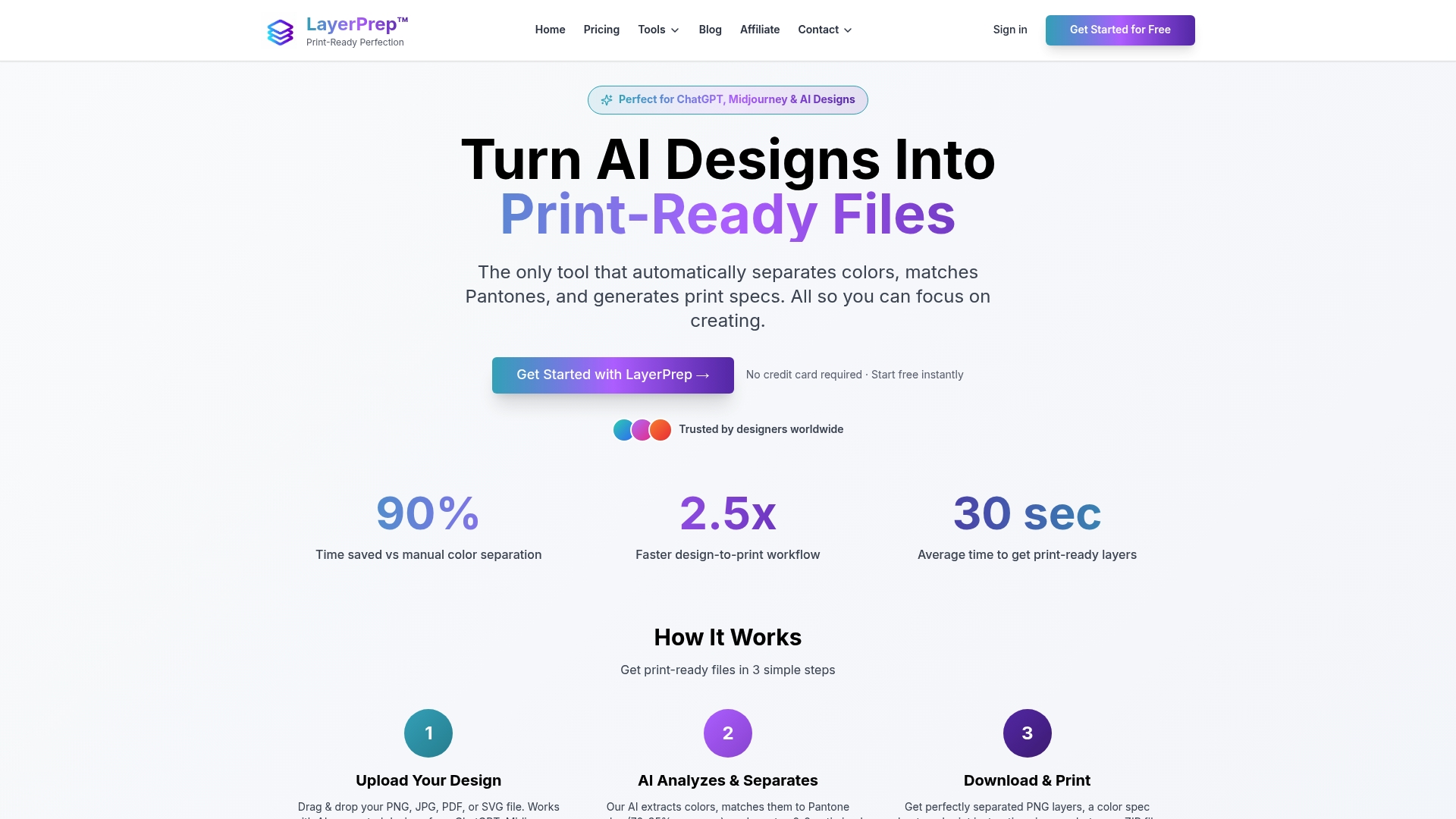
Whether you're preparing files for screen printing, DTF, or other methods, LayerPrep AI design color separator handles complex gradients and multi-color designs with 70 to 95% Pantone matching accuracy. The platform accepts PNG, JPG, PDF, and SVG files up to 50MB, validating DPI resolution and bleed specifications automatically. Print shops using LayerPrep screen print tool report average file preparation times of just 30 seconds, enabling faster turnaround and more competitive pricing.
Pro Tip: Integrate automation tools like LayerPrep early in your design workflow to catch specification issues before they reach production, preventing costly reruns and maintaining consistent quality.
FAQ
What factors determine the best printing method for a project?
Key factors include print volume, color complexity, substrate type, budget, and required turnaround time. High volumes favor methods with setup costs like offset or screen printing, while short runs work best with digital. Substrate compatibility matters because not all methods work on textiles, plastics, or flexible materials equally well.
Can digital printing match the quality of offset printing?
Digital printing offers good quality with higher resolution specs but generally lower color consistency and vibrancy than offset, especially at high volumes. Offset delivers superior color fidelity and sharpness for large runs where setup costs are amortized. Digital excels in flexibility and speed rather than matching offset's quality ceiling.
How does substrate choice affect printing method selection?
Substrates like textiles, paper, plastics, and flexible materials require compatible printing methods to ensure proper ink adhesion and durability. Screen printing and DTF work best on textiles, offset suits paper and cardboard, while flexography handles flexible packaging films. Mismatched substrate and method combinations result in poor adhesion, smudging, or premature wear.
What are the cost implications of switching printing methods?
Setup costs vary dramatically across methods. Offset and gravure require expensive plates or cylinders, creating high upfront costs but low per-unit pricing at scale. Digital printing eliminates setup fees entirely but charges higher per-unit rates. Switching methods mid-project often means absorbing new setup costs without volume benefits, making initial method selection critical for budget control.
Recommended
- What are print layers? A guide to efficient print files
- Streamline digital artwork print process in 2026
- LayerPrep - AI Design Color Separator for Print Shops | Pantone Color Extraction
- Printing Techniques Explained: Shaping Brand Story – BcardsCreation
- DTF vs Screen Printing Explained: Making the Right Choice – Transfer Kingz